Active Lifestyle
Movement, Meals, and the Balance Between Activity and Food Choices
· 9 min read

The weekly shop is, in a quiet way, a nutritional record. What ends up in the basket tells a story about seasonal availability, habitual preferences, and the invisible patterns that shape how we eat across the months. For those tracking weight over longer periods, this record contains observations that no single meal could offer. The rhythm of the week, repeated across seasons, becomes the actual subject of nutritional enquiry.
Most conversations about food and weight focus on the individual meal: what was on the plate, how much was eaten, when. These are useful observations, but they sit at the wrong scale for understanding how weight changes gradually over time. The more instructive frame is the weekly one. What does a typical Tuesday look like in February, compared to August? What changes when courgettes arrive in the shops and swedes become harder to find?
Seasonal produce shapes the weekly diet in ways that are largely invisible until you begin to record them. The arrival of spring vegetables tends to increase the variety on the plate without any conscious decision. A household that buys whatever looks good at the market in March will eat differently from the same household in November, and those differences compound across months into something that resembles a nutritional pattern.
This pattern, rather than any single food choice, is what nutritional balance observes over time. Seasonal rotation introduces variety almost automatically, distributing different micronutrients across the weeks without requiring specific planning. The whole foods approach, when anchored to seasonal availability, becomes self-sustaining in a way that shopping by fixed list cannot replicate.

The relationship between seasonal produce and gradual weight change is not straightforward, and it resists reduction to a simple formula. What the evidence-informed approach suggests is that dietary variety — the kind that seasonal shopping naturally introduces — supports a sense of fullness and nutritional satisfaction that processed food reliance tends to undermine. This is less about any particular vegetable's properties and more about the cumulative effect of eating a wide range of plant-based whole foods across weeks and months.
Dietary fibre, abundant in most seasonal vegetables and fruits, supports a sense of fullness between meals. Protein-rich whole foods contribute to a sense of satiety. These are not instructions for weight management — they are observations about how the body processes different kinds of food, drawn from published dietary research and consistent across a wide range of nutritional studies.
When the plate changes with the season, the body encounters different combinations of these foods rather than a fixed routine. For those who find rigid eating patterns difficult to sustain, the natural variation of seasonal shopping provides a structure that supports nutritional balance without requiring constant decision-making.
"The weekly shop, when guided by seasonal availability, becomes a nutritional document. Not a strict record of nutrients, but a loose map of how eating changes with the year."
Food journalling is often described as a weight-management strategy, but its more interesting function is observational. A weekly food record, kept consistently over two or three months, tends to reveal patterns that are impossible to perceive meal by meal. The tendency to skip breakfast on certain days, the consistent reduction in vegetable intake when work is heavy, the seasonal shift toward warm carbohydrate-rich meals in October — these patterns are the actual subject of long-term nutritional observation.
The practice does not need to be precise to be useful. A brief daily note — what was eaten, roughly how much, at what time, and in what mood — provides enough data to identify patterns across weeks. The mood component is often overlooked but consistently relevant: the relationship between stress and food choices is well-documented in published dietary research, and a simple journal surfaces this connection in personal terms that abstract statistics cannot.
For those interested in gradual weight change, the weekly record provides one thing no single observation can: continuity. The body does not respond to individual meals in isolation; it responds to the accumulated pattern of thousands of them. Seeing that pattern clearly, even in rough form, changes how food choices are understood and, in many cases, how they are made.
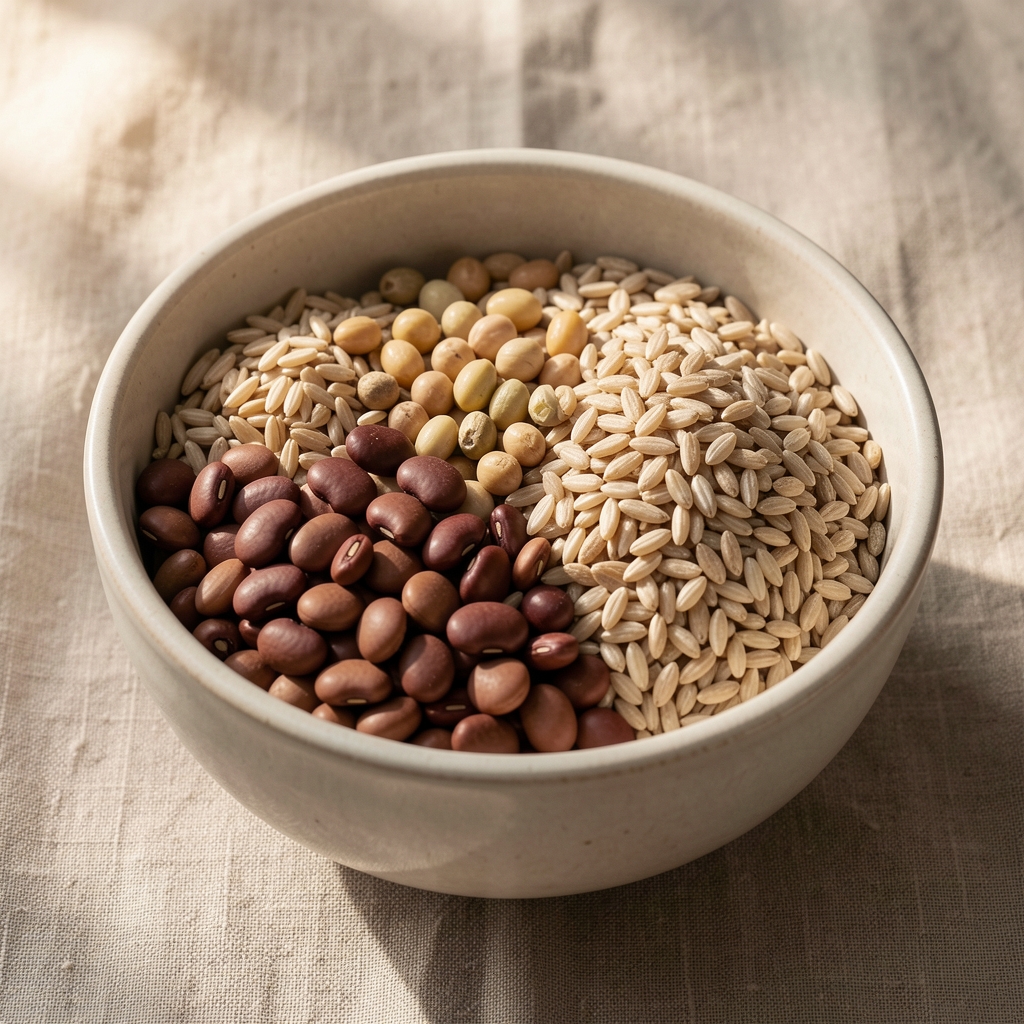
For those wanting to anchor their weekly diet more firmly to seasonal availability, a few simple habits tend to help. First, buying at least two vegetables that are visibly in season — whatever is most abundant and least expensive at the market — makes seasonal variety the default rather than the exception. Second, planning two or three dinners each week around a plant-based whole food as the main source of nutritional density keeps the plate varied without requiring detailed nutritional knowledge.
Third — and this is the observation that appears most consistently in long-term food journals — preparing meals at home allows ingredient and portion awareness in a way that eating out or relying on prepared food does not. This is not an argument for avoiding convenience, but an observation about where nutritional awareness actually operates in practice. The kitchen is where the weekly rhythm is set.
Seasonal eating is not a protocol. It is, at its simplest, the practice of noticing what is available and allowing availability to guide selection. Over weeks and months, this practice produces a diet that changes naturally, distributes nutritional variety, and supports a sense of engagement with food that is difficult to sustain through fixed plans and rigid categories.
From a nutritionist's perspective, the appeal of seasonal eating as a framework for weight awareness lies in its sustainability. Unlike approaches that require significant willpower or constant self-monitoring, a seasonal routine rewards curiosity and mild attention. The question is not "is this food allowed?" but "what is good at the market this week?" That shift in framing — from restriction to selection — is one of the most consistent predictors of long-term success in the nutritional literature.
Gradual weight change, when it occurs through dietary adjustment rather than rapid restriction, is also more likely to persist. The body's adjustment to a varied, plant-forward, whole-foods diet takes place over months rather than weeks, which means the results are not immediately dramatic but are proportionately more stable. The weekly rhythm, sustained across seasons, becomes its own form of nutritional discipline — one that does not feel like discipline at all.
This is the observation that the Gralev Dispatch field notes return to, consistently, across the articles gathered here: that sustainable nutritional balance is less a matter of strict adherence to any particular diet, and more a matter of the quiet, accumulated weight of many small, consistent choices made across the rhythm of weeks.

Eleanor Whitfield is the principal editor of Gralev Dispatch. Her writing draws on over a decade of nutritional observation and field-note practice, focusing on everyday food choices, seasonal produce, and gradual weight awareness. She is based in London.
More from this author