
Nutrition Notes
How Seasonal Eating Shapes a Weekly Nutritional Rhythm
Eleanor Whitfield · 12 February 2026 · 10 min read
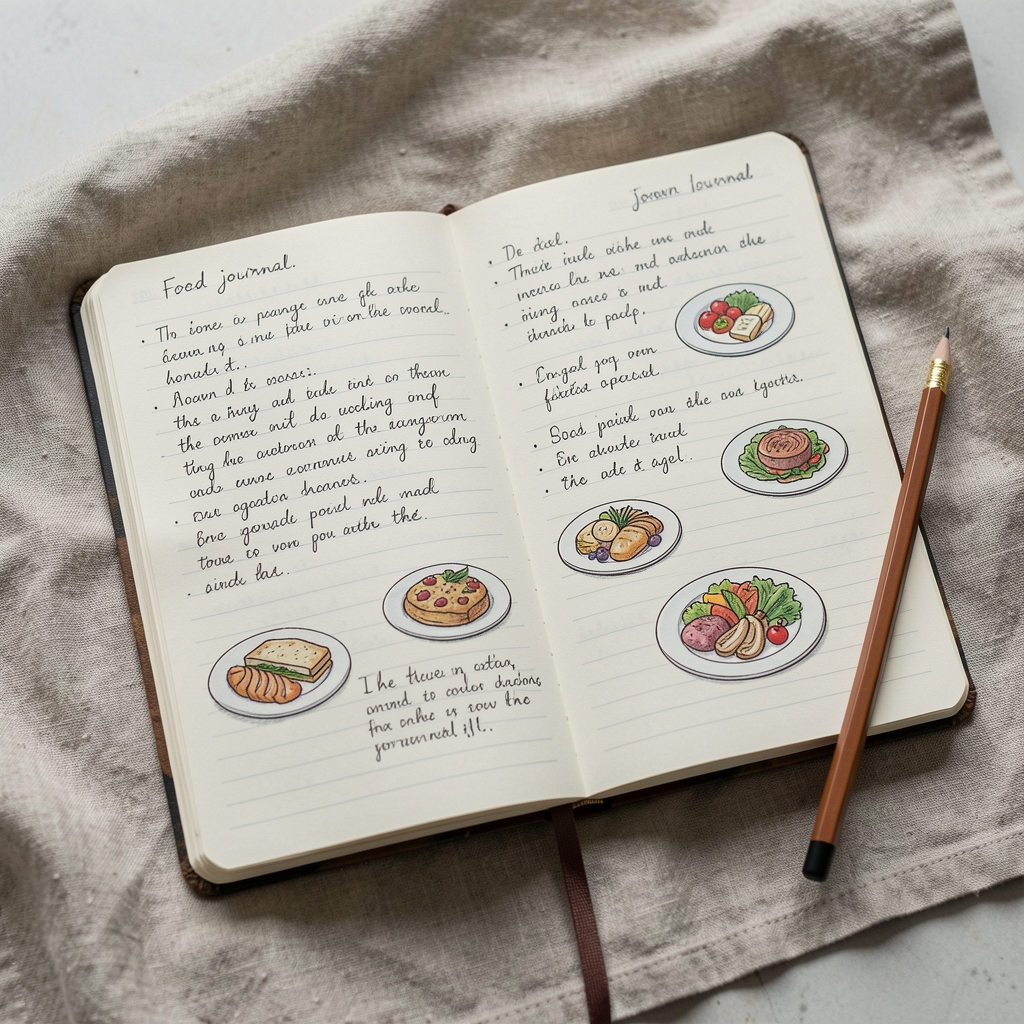
For twelve weeks, a notebook sat open on the kitchen table beside every meal. The entries were not counts or measurements. They were observations — colour, texture, pace, appetite. What emerged was not a record of calories. It was a record of habits.
Food journalling has accumulated an unfortunate reputation. It is associated, in many people's minds, with the meticulous tracking of numbers — grams of protein, calorific totals, macronutrient splits. That version of journalling is exhausting by design. It positions the act of eating as a problem to be solved rather than a pattern to be understood.
The approach documented here was different in its intent. Rather than measuring, the notebook asked a simpler question: what was actually on the plate today, and how did it feel to eat it? The answers, written in plain language over twelve weeks, produced something unexpected — a legible account of how portion sizes, food variety, and eating pace shifted across the weeks without any deliberate intervention.
The early entries were the least polished. Meals were noted briefly — sometimes only a single line. But even in their sparseness, patterns were visible by the end of the first week. Tuesday lunches were consistently smaller than Monday lunches. Weekend breakfasts included more variety than weekday ones. The evening meal on days with longer working hours was typically composed of fewer fresh ingredients.
None of this was a surprise, exactly. But seeing it written down, in sequence, gave it a weight that internal awareness alone had not provided. The act of recording created a mild but consistent form of attention — not anxiety, but noticing. When a plate was assembled on a Wednesday evening, there was a low-level awareness that the notebook was there, waiting to receive a description of it.
This noticing is the central mechanism of food journalling when it is practised without a counting imperative. The journal does not tell the reader what to eat. It shows the reader what they have been eating. The difference is considerable.
By the fourth week, the entries began to include brief notes on portion size — not in grams, but in spatial language. A bowl described as “full” versus “half-full”. A plate noted as “two-thirds vegetables, one-third grain”. These descriptions, while imprecise, created a consistent vocabulary across weeks that made comparison possible.
What the comparison revealed was a tendency that had previously been invisible: portion sizes on evenings when the meal was prepared quickly were systematically larger than those prepared at a more deliberate pace. The rushed plate was a generous plate. This is consistent with observations in nutritional research on eating speed and satiety — the body's response to fullness lags behind the moment of eating by approximately fifteen to twenty minutes, meaning faster eating tends to produce larger intakes before the signal arrives.
Seeing this pattern in writing, across eight consecutive weeks of entries, produced a behavioural shift that no instruction or rule had produced: the evening meals slowed down. Not through effort but through awareness. The notebook had made the pattern visible, and the pattern, once visible, became harder to sustain unconsciously.
The nutrition literature on dietary variety is largely consistent: a wider range of foods across the week is associated with better nutritional balance and, over time, with more sustainable weight management. The food journal offered an informal but revealing window into this. Reviewing the entries at the end of each week, it was possible to count how many distinct whole foods had appeared across the seven days.
In the first week: eleven distinct ingredients across all meals. In the eighth week: twenty-three. The increase was not deliberate. It emerged from the act of recording itself — a mild but persistent sense that a journal entry reading “pasta, tinned tomatoes, olive oil” for the third consecutive Tuesday lunch felt, somehow, less satisfying to write than one that described a more varied plate.
This is not a trivial observation. Dietary variety is difficult to engineer through willpower. It is easier to sustain through awareness. The journal created a feedback loop: recording what was eaten made the repetition visible, and the visibility prompted small, spontaneous adjustments — an extra handful of spinach, a different grain, a seasonal fruit added to breakfast.
The most significant finding from the twelve-week journal was not about food variety or portion size. It was about eating pace and the attention brought to the meal itself. From the sixth week onward, entries began to include brief notes on context: was the meal eaten at a table, or standing? Was there a screen present? Was the eating hurried or relaxed?
The correlation that emerged was consistent across all remaining weeks. Meals eaten at a table, without a screen, and without a time pressure produced smaller portions, greater satisfaction, and significantly less reporting of post-meal discomfort. Meals eaten quickly, while working or watching something, were larger and less satisfying in the retrospective description.
This is mindful eating, understood not as a spiritual practice but as an observable phenomenon. The quality of attention brought to the act of eating changes the act of eating. The journal did not instruct this. It documented it, and the documentation made the pattern available for reflection.
Food journalling is not a substitute for professional nutritional guidance when specific concerns exist. It does not provide the structured analysis that a qualified wellness professional can offer. What it does provide is a personal, legible, accumulated record of eating behaviour — one that the individual alone can see and act upon at their own pace.
It is also not a counting exercise. The moment the journal becomes a ledger of debits and credits, it loses the quality of observation that makes it useful. A food journal kept with curiosity is a different document from one kept with anxiety. The former produces awareness. The latter, in this observer's experience, tends to produce avoidance.
Over twelve weeks, entries were missed on seventeen days. The missed days did not disrupt the overall pattern. The journal did not require completeness to be informative. What it required was regularity — a practice that was sustained across most days, not all of them. The occasional gap was noted without judgment and the record continued.
This is worth stating because the perfectionist version of food journalling — the one where every entry must be detailed, accurate, and complete — tends to collapse quickly. The sustainable version is tolerant of imperfection. The notebook accepts an incomplete entry. It accepts “dinner: leftovers from Tuesday” as a valid observation. It asks only that the hand reaches for the pen, and that the record continues.
The twelve-week notebook now sits on a shelf. It is not read often. But its existence — the knowledge that the pattern was recorded, that the habits were observed and described — has left a residue. The plate, when assembled now, is assembled with a slightly different quality of attention than it was before. That, in the end, is what food journalling offers: not a number, but a noticing.

Tobias Marsden writes on food behaviour, eating rhythm, and the relationship between daily movement and nutritional awareness. He contributes field notes and observational essays to Gralev Dispatch from London.
More from Tobias Marsden →